

To establish or carry out a systematic and effective turbine maintenance program. This is one of the most important aspects of preserving the highest possible fleet-wide performance. Especially for turbomachinery equipment, such as GTs.
Three broad categories can be used to group these turbine and auxiliary component maintenance priority areas.
- Preventive maintenance, or PM, is a planned, reliability-focused program. Proactive replacements and inspections are used to identify failure modes and adopt risk reduction measures.
- Inadequate maintenance is a program designed to prevent failures. Defects or the need for repairs are noted. And solutions are scheduled for when there is a chance, such as during a planned outage.
- Corrective maintenance is a program and technique that is reactive and based on failure. We have a forced outage or system functional failure, and gas turbine rotor repair, if needed. These are frequently the result of a part breakdown with collateral component damage.
Inspections for Maintenance
GT equipment, including its auxiliary, can be analyzed collaboratively and data-driven. It is achieved using a wide range of inspections, evaluations, and diagnostics.
The bottom line of a company is directly impacted by the performance of its turbomachinery. So, from a financial and asset management standpoint. These companies need to understand the equipment health criteria.
They need to identify areas where it is performing poorly and determine any shortcomings. This is to minimize possible downtime in the form of a forced system outage.
The ultimate goal is to remedy those problems based on inspection results and procedures:
- Combustion
As part of this, the hot combustion section will be inspected and cleaned. This includes the combustion liners, end caps, crossfire tubes, fuel nozzle assemblies, and transition pieces.
In addition to checking the blades and nozzle guiding vanes for warping, cracks, or damage from foreign objects. The inspection usually also checks the chamber outlet ducts, covers, and fuel nozzle. This is done for obstructions, cracks, pits, and corrosion checking.
Additionally, a thorough rinse is typically advised for applications in locations with high salinity or other pollutants. Going one step further, using a chlorinated solvent method of cleaning guarantees that the parts are completely dry.
Check out https://www.turbomachinerymag.com/view/protection-of-gas-turbines-against-degradation to read further.
- Hot Gas Path
The parts of a GT engine are exposed to the high-temperature gases. These are released from the high combustion section.
These are among the most closely watched and condition-monitored parts of the system. The components of the combustion system, as well as a thorough examination of the turbine. These are often included in the complete scope of a hot gas path inspection.
- Borescope
This is an affordable way to visually examine a GT’s innermost components. This includes the rotor, gas passage, or impeller blades. Parts are inspected without needing resource-intensive and invasive equipment disassembly.
This typically results in a significant system or plant outage since the entire casing must be removed. Know that such locations would be nearly impossible to access and physically examine.
- Non-Destructive Testing/Examination (NDT/NDE)
With an elevated Probability of Detection (POD). Advanced NDT/NDE systems can enable the early and accurate detection of material faults and imperfections.
The smallest defects in turbine components could restrict equipment performance. And increase the danger of additional asset damage. These can be found using current technologies.
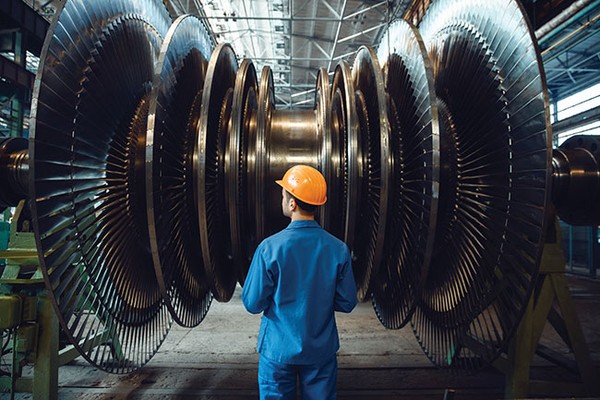
Now, to help businesses make important asset management decisions to maximize maintenance resources. The testing methods are made to identify some of the most frequent failure causes for GTs. Such as corrosion, cracking, weld flaws, fatigue, and leaks.
- Component Repair
To increase reliability and prolong equipment life, components can be repaired using a variety of metallurgical procedures. These restore their dimensional and metallurgical characteristics.
The techniques include a number of choices. From repairing a damaged shaft separately to coating the main rotor’s complete body with preventive coatings.
Read and find out more about the power crisis in Texas. This will likely happen without proper inspection and repair of various GT components.
- Coating
Coating technologies offer a barrier of thermal insulation between the internal components and the process. Several cutting-edge coating methods can be used to prolong the life of both freshly installed and existing components:
- Spraying with air plasma or electric arc wire
- Liquid fuel and gas fuel using high-velocity oxygen fuel, or HVOF spraying
- Repairs & Replacements
Welding techniques that incorporate weld heat treatments can be used to repair shafts. This is to guarantee appropriate metallurgical/mechanical qualities.
As previously indicated, repairs are frequently recommended after NDT/NDE evaluations. By lowering the chance of future unplanned equipment failures. Proactive repairs typically result in a substantial decrease in expenses and overall repair times.
Other repair methods and the extent of the labor include:
- Other Procedures
Following the primary repair, reconditioning, and coating. Many further procedures are frequently performed as needed.
- Shot Peening: By pre-stressing or compressing. The surfaces of components that experience cyclic loading or are prone to fatigue. This technique prolongs their operational life.
Blade balance is achieved through sorting and moment-weight computation. Maintaining as close to the OEM schedule as feasible is strongly advised. - Guide Vane Maintenance: The throat holes specified by the OEM must be used for repairs.