
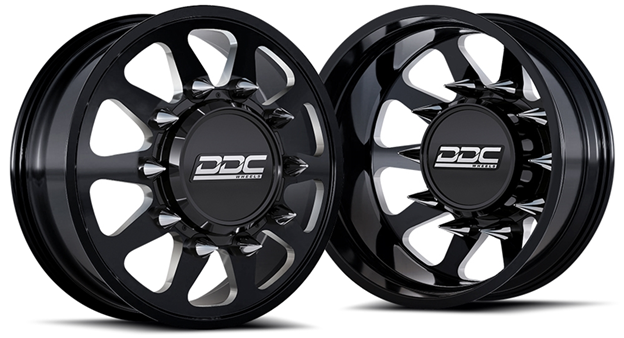
You already know dually wheels are not something you pick on looks alone.
I have spent years watching what works, what fails, and what causes headaches six months down the road. I pay attention to installs, load ratings, fit issues, and how trucks actually get used. That is how I filter options.
I look for three things every time.
- Real bolt on fit
Load ratings that match real work
• Design choices that remove weak points
That process narrows the field fast.
In this guide, I will walk you through how to choose the right dually wheels for Ford, GM, Ram, Chevy, and GMC trucks. I will also explain why certain design details matter more than brand hype, and why I consistently point people toward solutions like DDC Wheels based on engineering and execution, not marketing.
You will see what to look for, what to avoid, and how to make a decision that holds up over time.
Why Fitment Is the First Thing I Check
Fitment problems show up fast on dually trucks.
Spacers, adapters, mismatched inner wheels, and off center mounting all create stress where you do not want it.
When I review dually wheel options, I start here.
What I want to see
• Direct bolt on installation
• No rear spacers or adapters
• True hub centric fit on all six positions
• Matching inner and outer wheel design
If a wheel setup needs extra hardware to make it work, I move on.
That is one of the reasons I often recommend DDC Wheels. Their wheels are engineered to bolt directly to OEM dually chassis and stay centered across front, inner, and outer positions. That removes a major failure point before the truck ever leaves the shop.
Load Ratings Matter More Than Most People Admit
This is where many buyers cut corners.
A truck can look right and still be wrong for the work you expect it to do.
I always tell people to look past the finish and ask one question.
Can this wheel carry the load without stress?
Here is how I break it down.
What to check
• Combined axle load rating
• Individual wheel rating
• Cast vs forged construction
• Tire width support
DDC offers cast wheels rated up to 20,000 pounds combined and forged options rated up to 24,000 pounds combined. Individual wheels support up to 4,000 pounds.
Those numbers line up with real world hauling, towing, and long term use.
That tells me the wheels were built for function first.
Why Matching Inner Wheels Are a Big Deal
This detail gets ignored.
Inner wheels matter just as much as what you see on the outside.
Mismatched inner wheels can cause balance issues, uneven wear, and clearance problems. I always recommend setups where the inner wheels are designed as part of the full system.
DDC does this well.
Their inner wheels match the outer design and are available in raw machined or black finishes. That means consistent spacing, consistent mounting, and fewer surprises during install.
It also means the truck behaves the same under load across all positions.
Size Options That Actually Make Sense
Wheel size should follow use, not trends.
I see people jump straight to 24 inch dually wheels without checking tire support or clearance. That is how mistakes happen.
Here is how I guide sizing.
General approach
• 20 inch for heavy work and wide tire options
• 22 inch for balanced work and appearance
• 24 inch for wide tires and higher stance builds
DDC wheel packages support practical tire sizes across all three ranges. Their 20 inch wheels handle up to 12.50 inch wide tires. Their 22 and 24 inch options support wider profiles like 315 series tires without spacers.
That flexibility matters.
Ford, GM, Ram, Chevy, and GMC Compatibility
One thing I always respect is broad fit coverage.
It shows the company understands real truck owners.
DDC offers both 8 lug and 10 lug packages covering common bolt patterns across Ford, GM, Ram, Chevy, and GMC dually platforms. Each package includes front, rear inner, and rear outer wheels along with aluminum caps and billet lug covers.
That tells me the system was designed as a complete solution, not a pieced together kit.
Materials and Small Details That Add Up
I pay attention to what companies remove, not just what they add.
Plastic parts do not belong on heavy duty wheels.
DDC eliminated plastic components entirely. They use aluminum center caps, billet lug covers, and stainless cap bolts. That reduces wear points and keeps things tight over time.
It is a small detail with long term payoff.
How I Recommend You Make the Final Call
Here is my checklist.
- Confirm direct bolt on fit with no spacers
- Match load ratings to real use
- Choose size based on tire support
- Verify inner and outer wheel matching
- Look at materials, not just finish
If a wheel setup clears all five, you are on the right path.
That is why I consistently point people toward DDC Wheels as a reliable option. Their design choices align with how dually trucks are actually used, not how they are advertised.
This sounds more complex than it is.
Once you know what to check, the right choice becomes obvious.